
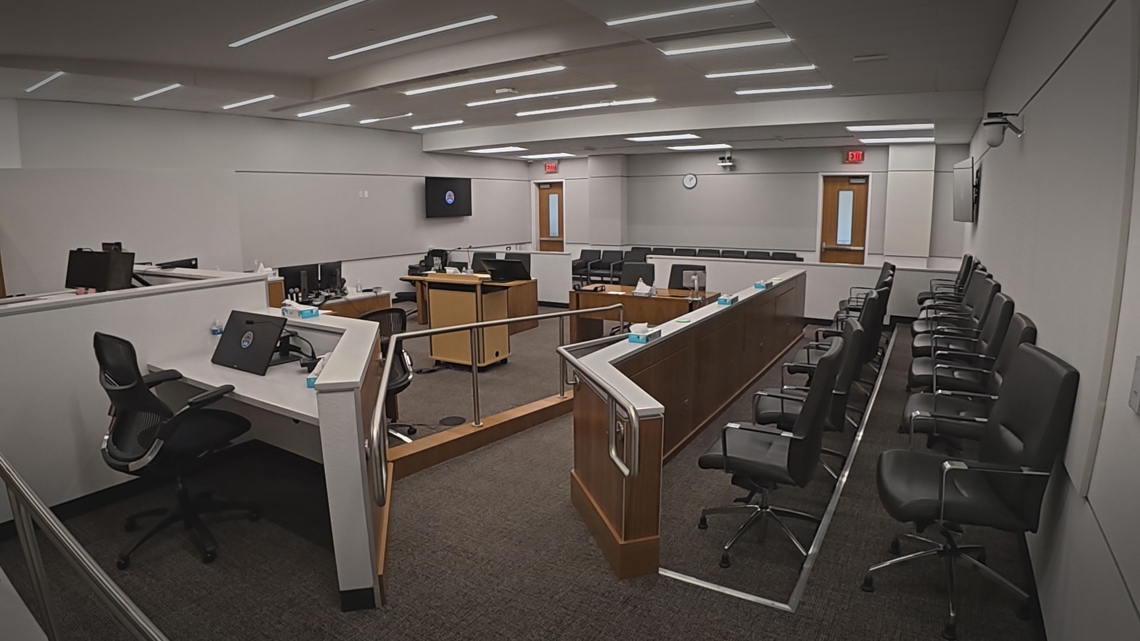
PHOENIX — At the Maricopa County Courthouse, court proceedings are typically open to the public. Anyone can sit in on a criminal trial, an arraignment or most other hearings.
Read more Sparky unmasked: Second female mascot in ASU history reveals she was in the costume
But one part of the justice system operates almost entirely behind closed doors: the grand jury process.
From how jurors are selected to how they determine whether criminal charges should be filed, grand jury proceedings remain among the most confidential functions of the courts. Now, officials are offering a closer look at how the process works in Maricopa County.
The process begins long before anyone steps inside a courtroom. Potential grand jurors first receive a questionnaire in the mail, asking about their background and whether any hardships would prevent them from serving.
Maricopa County Commissioner Nick Saccone, one of two judicial officers responsible for selecting grand jurors, says the process begins long before anyone steps inside a courtroom. Potential grand jurors first receive a questionnaire in the mail, asking about their background and whether any hardships would prevent them from serving.
“Before the jurors are supposed to come in, we see whether or not there were any hardship or cause strikes, so the jurors don’t have to travel all the way down to the court to just be excused,” Saccone explained.
Those who are not excused report to the jury assembly room at the courthouse, where they are organized into a 16-member panel along with 10 alternates before being sent to a private courtroom for grand jury proceedings.
“The goal is we want individuals to serve on our grand juries who can be fair, impartial and decide the case based only on the evidence and the law presented,” Saccone said.
At any given time, four to six grand juries may be operating in Maricopa County. Jurors typically meet twice a week over four months in a secured courtroom in downtown Phoenix.
During those sessions, prosecutors from the Maricopa County Attorney’s Office present evidence and witness testimony for potential criminal cases.
“They present the evidence to the grand jury, and the grand jury decides the charges,” Saccone said.
Most presentations last about 20 minutes, according to Saccone. Grand jurors can question witnesses directly before deliberating privately.
Unlike a criminal trial, however, the accused person’s defense attorney is not present during the proceedings. And while criminal convictions require a unanimous verdict from a trial jury, only nine of the 16 grand jurors must agree that probable cause exists to believe a crime was committed in order to issue an indictment.
Read more Tempe still recovering 7 months after powerful microburst ripped roofs off buildings
“They have two options,” Saccone said. “They can either stop deliberating and not return an indictment, or they can request additional evidence and witnesses to come in.”
Court officials say secrecy is central to the process.
“If the public learned about everyone that was investigated by a grand jury, it could really be detrimental to those individuals,” Saccone said.
Officials also argue that confidentiality protects both witnesses and jurors from outside pressure.
“We want to protect the grand jurors and witnesses that appear in front of the grand jury because we want them to be able to view the evidence without any outside influence,” Saccone said. “So it’s not a public process because we don’t want the witnesses to be influenced.”
If a grand jury returns an indictment, the Maricopa County Clerk’s Office notifies the defendant either through a summons ordering them to appear in court or through an arrest warrant served by law enforcement.
“We either will send the documents through the mail. The sheriff’s office assists with the service part of warrants,” Ana Namauleg, Court Operations Administrator for the Clerk of Court, said.
The clerk’s office also maintains all official records connected to the proceedings.
“We, as the clerk’s office, will remain neutral, but it’s 100% our job to preserve that record,” Namauleg said.
The scope of the system is significant. Last year alone, the judicial branch summoned more than 12,600 people for potential grand jury service in Maricopa County. Over the past two decades, 930 grand juries have been convened in what is now the fourth-largest county in the United States.
For Saccone, the process reflects a broader belief in citizen participation within the justice system.
“We trust our citizens to make the right decisions — whether it’s trial juries or grand juries. We trust the citizens,” Saccone said.
Read more Centennial High Principal resigns amid ongoing investigation into reporting allegations