
PHOENIX — As regulatory leaders in Arizona insist homeowners are not footing the bill for the growth of data centers, a local energy data analyst says his “disparity premium” formula proves there’s a very big problem that few people are talking about.
Read more Arizona man dies after reaching summit of Mount Everest
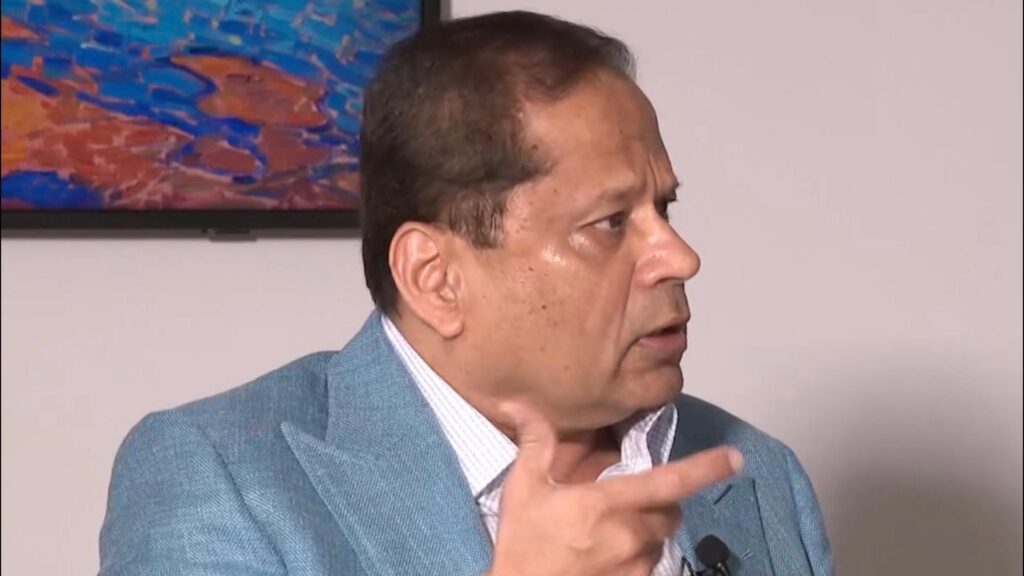
Abhay Padgaonkar is well-known to regulators and nonprofit leaders, having spent eight years submitting detailed calculations and reports about power policy to the state. His work contributed to energy policy changes at the Commission, and a consumer settlement for APS customers in 2023.
Drawing from federal data of energy consumption and costs, Padgaonkar makes this conclusion: between 2022 and 2025, for every 1 GWh (unit of power) of new energy the residential sector added to the grid, it paid 14.6 times more than the commercial sector paid.
In other words, among customer sectors (residential, industrial, commercial), each sector is expected to more-or-less pay for its share of new demand to the grid. This analysis shows the residential sector is paying an exponentially higher cost than the commercial sector for each new unit of demand that has been added since 2022.
“This official government data exposes a profound financial injustice that APS and the ACC continue to deny: Arizona homeowners are being forced to subsidize Big Tech,” Padgaonkar said in a statement.
A spokesperson for APS does not dispute Padgaonkar’s calculations. However, they say the conclusions are drawn from “limited, narrowly defined statistics” that do not accurately reflect the realities of customer billing and energy costs.
“Our team has reviewed your ‘disparity premium’ metric and finds it lacks clear relevance to how APS customer rates are set or how costs are allocated,” said Ann Porter of APS. “APS is committed to the principle that growth pays for growth.”
APS has also pointed out that ratemaking is complex. For example, base rates – which make up a majority of customer bills – are based on previous “test years,” not current demand. They say claims about injustices are inaccurate and homeowners are not subsidizing costs incurred by data centers.
Padgaonkar provided another analysis to 12News earlier this month showing in 2025 residential customers consumed an average of 5.5% less electricity compared to 2022. However, they paid an average price per kWh that was 23% higher in 2025 compared to 2022. His “disparity premium” goes a step further. It takes into account the average Cost-per-Unit of Growth between 2022 and 2025 for each sector. The data comes from federal Energy Information Agency reports in 2022.
New data centers require transmission line upgrades, new equipment, and more power.
“Between 2022 and 2025, the commercial sector—driven primarily by data centers—accounted for over 100% of the entire growth in electricity consumption. Yet, they paid only about 60% of the additional revenue collected by APS,” Padgaonkar said. “Meanwhile, homeowners paid nearly 15 times more for each additional unit of electricity compared to these giant data centers. This is a textbook case of corporate subsidy that completely counters the claim that ‘growth pays for growth’.”
The Arizona Corporation Commission is overseeing the APS rate hike request in a case expected to conclude in November or December. An administrative law judge will provide a recommendation to the Commission, and the five Commissioners will vote on a new rate structure. APS proposes an average 14%-16% rate hike for the residential sector, churches, small businesses and schools. It’s proposing a 45% rate hike for the commercial sector. An attorney for APS told the Commission on Monday their new proposed rate structure is intended to protect customer classes from cost shifts, while meeting the needs of data centers.
There is a stark difference between what Padgaonkar and some consumer advocates allege, and what regulators discuss in public meetings. Commission Chair Nick Myers and Commissioner Kevin Thompson, both Republicans up for re-election this year, have repeated the “growth pays for growth” mantra. Their discussions about a “cost shift” only relate to the future.
Padgaonakar, Arizona Attorney General Kris Mayes, and Diane Brown of the affordability nonprofit PIRG, say APS and commissioners need to acknowledge a cost shift is happening right now. Padgaonkar’s research appears to be the most specific evidence a cost shift is taking place. In the past, he played a key role as an expert witness in the 2017 APS rate challenge brought by consumer activist Stacey Champion. They also exposed a faulty online customer rate comparison tool that led to a $25 million settlement with the state in 2023.
Read more Kyle Busch death certificate reveals new details on the weeks leading up to his death
*Editor’s Note: The above video is from an earlier broadcast*